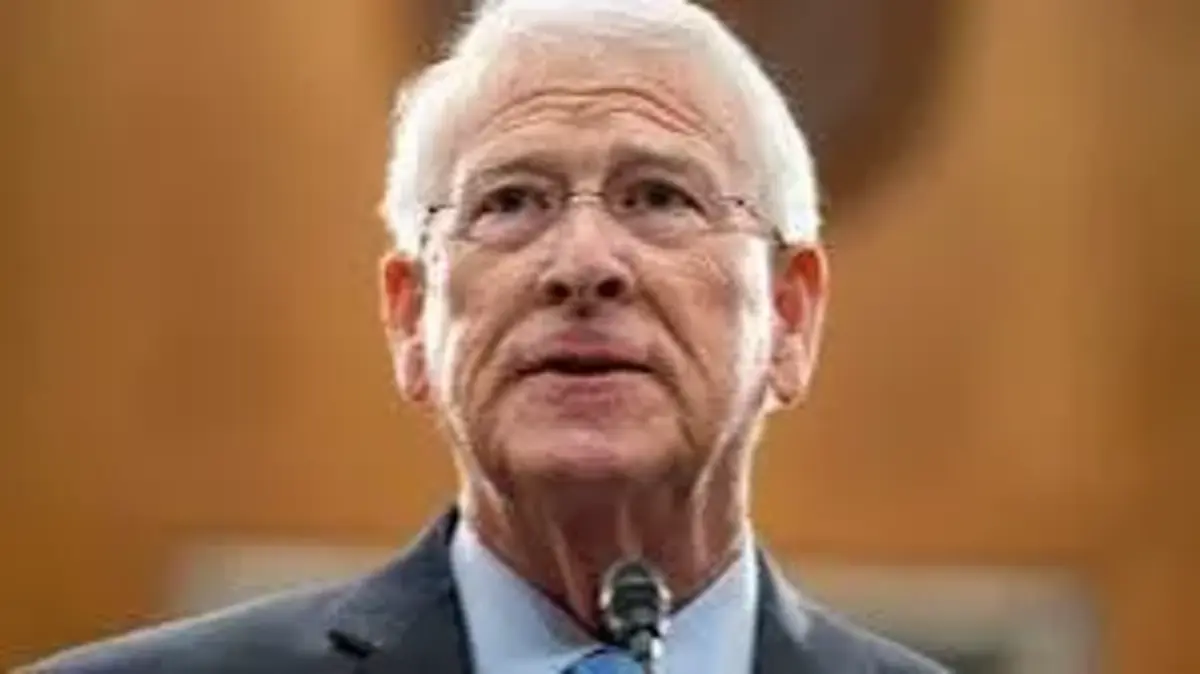
Roger Wicker Bio: Age, Family, Military, Senate & Net Worth
Roger Frederick Wicker has built one of the longest-serving political careers in Mississippi history. He has represented the state in Congress for decades. Today, he remains one of the most influential Republican lawmakers in Washington.
As of 2026, Roger Wicker serves as the senior United States Senator from Mississippi. He also chairs the Senate Armed Services Committee, giving him a major role in shaping America’s defense policy.
Throughout his career, Wicker has supported military modernization, economic development, infrastructure improvements, and conservative public policies. Consequently, he has earned recognition as an experienced legislator with extensive committee leadership.
Roger Wicker is an American politician, attorney, and retired Air Force Reserve lieutenant colonel. He has served as Mississippi’s senior U.S. Senator since December 2007.
Before joining the Senate, he represented Mississippi’s First Congressional District in the U.S. House of Representatives for seven consecutive terms.
Over time, he became known for his work on defense, transportation, technology, healthcare, and manufacturing policies.
Roger Wicker Quick Facts
| Detail | Information |
|---|---|
| Full Name | Roger Frederick Wicker |
| Date of Birth | July 5, 1951 |
| Age (2026) | 75 years old |
| Birthplace | Pontotoc, Mississippi, United States |
| Political Party | Republican |
| Profession | Politician, Attorney |
| Military Service | United States Air Force and Air Force Reserve |
| Current Position | Senior U.S. Senator from Mississippi |
| Spouse | Gayle Long Wicker |
| Children | Three |
| Education | University of Mississippi |
Early Life and Childhood
Roger Wicker was born on July 5, 1951, in Pontotoc, Mississippi.
He grew up in a family that valued education, faith, and public service. His father, Fred Wicker, served as a circuit judge. Meanwhile, his mother, Wordna Wicker, encouraged academic excellence.
These early influences shaped his future interest in law and government.
Education
Wicker attended public schools in Pontotoc before enrolling at the University of Mississippi.
He earned:
- Bachelor of Arts degree (1973)
- Juris Doctor (Law Degree) in 1975
During college, he participated in the Air Force Reserve Officer Training Corps (ROTC), preparing for military service after graduation.
His legal education later became a strong foundation for his legislative career.
Military Service
After law school, Wicker joined the United States Air Force.
He served on active duty from 1976 to 1980.
Later, he continued serving in the Air Force Reserve for more than two decades.
He retired in 2004 with the rank of lieutenant colonel.
His military experience strongly influenced his approach to national security and defense policy.
Legal Career
Before entering Congress, Wicker practiced law in Mississippi.
He also served as:
- Judge pro tempore
- Public defender for Lee County
- Congressional staff member for Representative Trent Lott
These positions provided valuable experience in public administration and legal affairs.
Entry Into Politics
Roger Wicker entered elected office in 1988.
He won a seat in the Mississippi State Senate, representing Lee and Pontotoc counties.
During his state legislative service, he focused on education, transportation, and economic growth.
His leadership soon attracted statewide attention.
U.S. House of Representatives Career
In 1994, Wicker won election to the U.S. House of Representatives.
He represented Mississippi’s First Congressional District.
Voters reelected him seven consecutive times.
His House service lasted from 1995 until 2007.
During those years, he worked on:
- National defense
- Healthcare
- Tax policy
- Technology
- Infrastructure
- Small business development
His growing influence helped prepare him for Senate leadership.
Appointment to the U.S. Senate
A major career opportunity arrived in December 2007.
Senator Trent Lott resigned from the Senate.
Mississippi Governor Haley Barbour appointed Roger Wicker to fill the vacancy.
Soon afterward, Wicker successfully defended the seat in a special election.
He later won reelection in:
- 2012
- 2018
- 2024
His current Senate term extends through January 2031.
Committee Leadership
Committee work defines much of Roger Wicker’s influence in Washington.
As of 2026, he serves as Chairman of the Senate Armed Services Committee. This role places him among Congress’s leading voices on military policy and national defense.
He also serves on several major committees, including:
- Commerce, Science, and Transportation
- Environment and Public Works
- Rules and Administration
- Helsinki Commission
These assignments allow him to shape legislation across multiple policy areas.
Defense and National Security
Defense policy remains Wicker’s signature issue.
He consistently supports:
- Strong military readiness
- Naval expansion
- Modern weapons development
- Increased defense spending
- Cybersecurity improvements
One of his most notable legislative efforts involved promoting expansion of the U.S. Navy fleet through the SHIPS Act, which aimed to strengthen American shipbuilding and maritime security.
His military background continues to influence his legislative priorities.
Economic Development
Wicker also advocates for Mississippi’s economic growth.
He supports:
- Manufacturing
- Aerospace industries
- Infrastructure investment
- Technology innovation
- Workforce development
Additionally, he has worked to attract federal research funding and private investment to Mississippi.
Business organizations have recognized his support for manufacturing and job creation.
Healthcare Initiatives
Healthcare represents another important area of Wicker’s legislative work.
He has supported programs addressing:
- Alzheimer’s disease
- Diabetes
- Heart disease
- Childhood obesity
- Rare diseases
- Muscular dystrophy
One of his most significant accomplishments involved authoring the MD CARE Act, which expanded research and treatment efforts for muscular dystrophy.
Political Views
Roger Wicker generally supports conservative Republican policies.
His priorities include:
- Strong national defense
- Lower taxes
- Limited federal government
- Border security
- Religious liberty
- Second Amendment rights
He also advocates for expanding domestic manufacturing and strengthening America’s global competitiveness.
Family Life
Roger Wicker married Gayle Long of Tupelo, Mississippi.
Together, they have three children and several grandchildren.
The family remains active in church and community activities.
Wicker has often spoken publicly about the importance of faith and family values.
Religion
Faith has always played an important role in Roger Wicker’s life.
He belongs to First Baptist Church Tupelo.
Over the years, he has served as:
- Sunday School teacher
- Church deacon
- Choir member
His religious beliefs frequently influence his public service philosophy.
Awards and Recognition
Throughout his career, Wicker has received recognition from several organizations.
His honors include awards related to:
- Manufacturing
- National defense
- Healthcare advocacy
- Disease research
- Public service
These recognitions reflect his work across several policy fields.
Roger Wicker Net Worth
Roger Wicker has not publicly disclosed a precise personal net worth.
Like many members of Congress, he files annual financial disclosure reports covering assets, liabilities, and investments. Those reports provide ranges rather than an exact figure, making any published estimate uncertain.
Recent Activities in 2026
During 2026, Wicker continued leading the Senate Armed Services Committee.
He remained active on defense legislation, military modernization, and foreign policy discussions. He also continued advocating for economic development projects benefiting Mississippi.
Legacy
Roger Wicker has spent more than three decades in national politics.
His career reflects long-term service in both the House and Senate.
Supporters credit him with advancing defense policy, military readiness, healthcare research, and economic development.
Critics disagree with some of his policy positions, particularly on social issues and federal spending priorities. Nevertheless, he remains one of Mississippi’s most influential political figures.