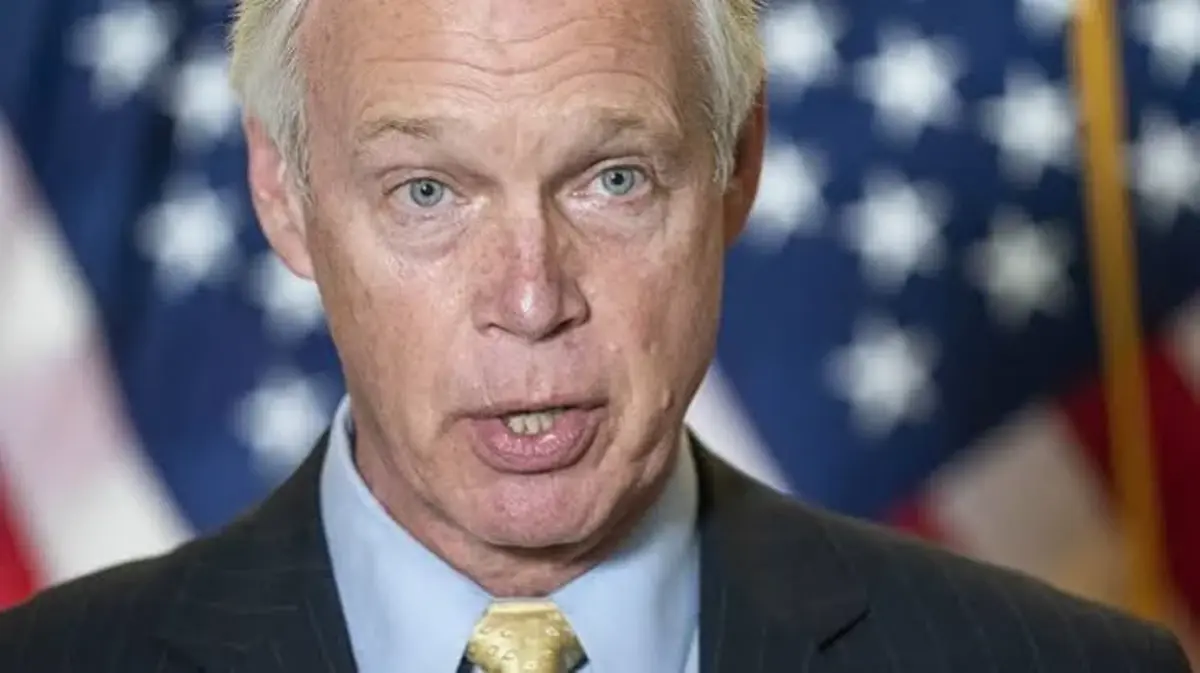
Ron Johnson Bio: Career, Business, Politics, Family & Net Worth
Ron Johnson is an American businessman and politician serving as the senior United States senator from Wisconsin. He entered politics after building a successful manufacturing business. Since then, he has become one of the Republican Party’s most recognizable conservative voices.
Johnson has shaped debates on federal spending, government oversight, border security, and healthcare. Moreover, he continues to influence national policy through committee leadership and public investigations. He currently serves as chairman of the Senate Permanent Subcommittee on Investigations while representing Wisconsin in his third Senate term.
Quick Facts About Ron Johnson
- Full Name: Ronald Harold Johnson
- Date of Birth: April 8, 1955
- Age (2026): 71
- Birthplace: Mankato, Minnesota, United States
- Political Party: Republican
- Education: University of Minnesota (Business and Accounting)
- Occupation: Politician, Businessman
- Current Position: U.S. Senator from Wisconsin
- Years in Office: 2011–Present
- Spouse: Jane Johnson
- Children: Three
- Residence: Oshkosh, Wisconsin
Early Life and Childhood
Ron Johnson was born on April 8, 1955, in Mankato, Minnesota. He spent his early years in a hardworking family that valued discipline and responsibility.
His parents encouraged strong work ethics from an early age. Consequently, Johnson developed an interest in business and entrepreneurship.
As a teenager, he worked part-time jobs while attending school. These experiences helped shape his practical approach to leadership and financial management.
Education
Johnson attended the University of Minnesota.
He earned a bachelor’s degree in business and accounting in 1977. After graduation, he pursued additional studies in business administration.
His education prepared him for a successful manufacturing career before entering politics.
Business Career
Before politics, Ron Johnson spent over 30 years in manufacturing.
He and his wife moved to Oshkosh, Wisconsin, where they became involved with PACUR, a plastics manufacturing company. Johnson initially worked as an accountant and later became a key executive.
Under his leadership, PACUR expanded significantly and became a respected manufacturer of specialty plastic products.
His business experience became a major theme during his political campaigns. Johnson often argued that private-sector leadership prepared him to improve government efficiency.
Supporters viewed him as a successful entrepreneur. Critics questioned whether business experience alone translated into effective governance. Nevertheless, his manufacturing background remains central to his public image.
Entry Into Politics
Johnson entered politics during the Tea Party movement.
In 2010, he challenged Democratic Senator Russ Feingold.
Many political observers considered Johnson an underdog. However, voter frustration over government spending helped his campaign gain momentum.
He won the election and became Wisconsin’s junior U.S. senator in January 2011.
His victory surprised many analysts and immediately established him as a rising Republican figure.
Senate Career
Since joining the Senate, Johnson has focused on fiscal responsibility, government accountability, and regulatory reform.
He has consistently advocated for:
- Lower federal spending
- Tax reform
- Border security
- Limited government
- Manufacturing growth
- Regulatory reduction
Additionally, Johnson frequently emphasizes reducing the national debt and controlling government expansion.
His Senate work often reflects his business-oriented approach to public policy.
Committee Leadership
Johnson has held several influential committee positions.
From 2015 through 2021, he chaired the Senate Homeland Security and Governmental Affairs Committee.
As of 2026, he serves as chairman of the Permanent Subcommittee on Investigations.
He also serves on several important committees, including:
- Budget Committee
- Finance Committee
- Special Committee on Aging
These assignments place him at the center of congressional oversight and budget discussions.
Major Policy Positions
Fiscal Policy
Johnson consistently argues for reducing federal deficits.
He frequently calls for spending restraint instead of expanding government programs.
Furthermore, he often warns about the long-term effects of rising national debt.
Healthcare
Healthcare remains one of Johnson’s most discussed issues.
He opposed the Affordable Care Act and has repeatedly advocated market-based healthcare reforms.
More recently, he has led investigations involving COVID-19 vaccine policies and federal health agencies. These actions have attracted both support and criticism.
Border Security
Johnson supports stronger immigration enforcement.
He has consistently backed increased border security funding and stricter immigration policies.
Government Oversight
One of Johnson’s defining priorities involves congressional investigations.
He regularly pushes for increased transparency across federal agencies and government programs.
Elections and Re-election
Johnson won his first Senate election in 2010.
He secured another victory in 2016 after defeating former Senator Russ Feingold again.
In 2022, Johnson won a third Senate term despite a competitive statewide race.
His current Senate term runs through January 2029.
Ron Johnson’s Leadership Style
Johnson often approaches legislation through financial analysis.
He frequently uses charts, statistics, and budget projections during Senate hearings.
Supporters appreciate his analytical style.
However, opponents sometimes criticize his confrontational approach.
Regardless, Johnson remains one of Wisconsin’s most recognizable political leaders.
Recent Activities (2026 Update)
During 2026, Johnson continued leading several high-profile investigations through the Senate Permanent Subcommittee on Investigations.
His work has focused on federal agencies, healthcare oversight, vaccine policy, and government transparency.
He also introduced legislation addressing individualized medical treatments and supported resolutions related to public health awareness.
Johnson also made headlines after briefly questioning the authenticity of a public photo involving Senator Mitch McConnell. He later withdrew those comments and stated they should be disregarded.
Political Philosophy
Johnson identifies as a constitutional conservative.
His philosophy centers on:
- Limited government
- Fiscal discipline
- Free-market economics
- Lower taxes
- Personal responsibility
These principles continue to guide his legislative priorities.
Family Life
Ron Johnson married Jane Johnson in 1977.
The couple has three children and several grandchildren.
The Johnson family has lived in Oshkosh, Wisconsin, for decades.
Although Johnson maintains a busy political schedule, he frequently highlights the importance of family and faith during public appearances.
Net Worth
Ron Johnson accumulated much of his wealth before entering politics.
His business success at PACUR contributed significantly to his financial standing.
Public financial disclosures indicate that he remains among the wealthier members of the U.S. Senate, although estimates vary because asset values fluctuate over time.
Awards and Recognition
Throughout his career, Johnson has earned recognition for:
- Manufacturing leadership
- Public service
- Government oversight
- Fiscal policy advocacy
Business organizations have also acknowledged his contributions to manufacturing and economic development.
Criticism and Controversies
Like many national political figures, Johnson has faced criticism.
His statements regarding COVID-19 policies generated widespread debate.
Additionally, several congressional investigations led by Johnson have drawn strong partisan reactions.
Supporters argue he promotes accountability.
Critics contend some investigations have amplified disputed claims.
His brief 2026 comments about a photo of Senator Mitch McConnell also received significant attention before he publicly retracted them.
Legacy
Ron Johnson has built a unique political career after decades in manufacturing.
His transition from businessman to three-term U.S. senator remains one of Wisconsin’s notable modern political stories.
Whether praised or criticized, Johnson continues to influence debates involving federal spending, healthcare oversight, national security, and government accountability.
His committee leadership ensures he remains an important figure in Washington.