
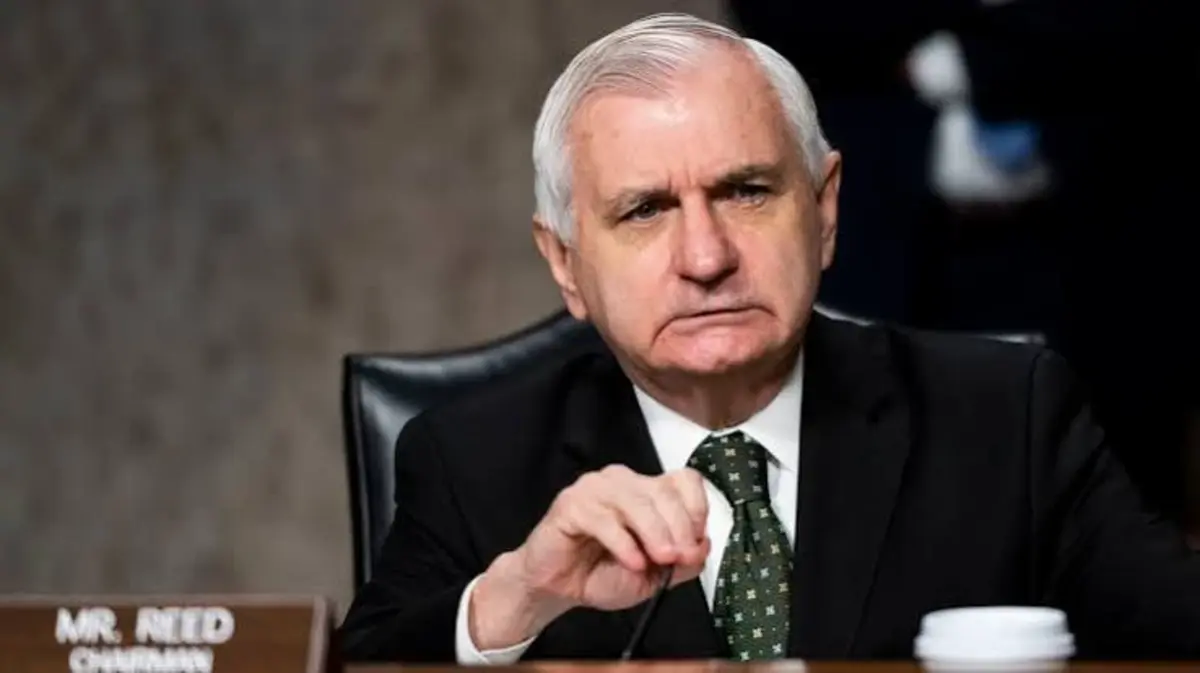
Jack Reed Bio: Military, Senate, Family, Politics & Net Worth
Jack Reed ranks among the most experienced lawmakers in the United States Senate. He has built a reputation through military service, public leadership, and policy expertise. Moreover, he remains one of Rhode Island’s most influential political figures.
As of 2026, Reed continues serving as the senior U.S. Senator from Rhode Island. He also remains a leading Democratic voice on defense, national security, banking, and government spending.
Quick Facts About Jack Reed
| Detail | Information |
|---|---|
| Full Name | John Francis “Jack” Reed |
| Date of Birth | November 12, 1949 |
| Age (2026) | 76 years |
| Birthplace | Providence, Rhode Island, USA |
| Hometown | Cranston, Rhode Island |
| Political Party | Democratic Party |
| Occupation | United States Senator |
| Military Service | U.S. Army and Army Reserve |
| Education | West Point, Harvard Kennedy School, Harvard Law School |
| Spouse | Julia Hart Reed |
| Children | One daughter |
Who Is Jack Reed?
Jack Reed is an American politician, attorney, and former Army officer. He has represented Rhode Island in the U.S. Senate since 1997.
Before joining the Senate, Reed served in the U.S. House of Representatives and the Rhode Island State Senate. Additionally, he enjoyed a distinguished military career that shaped his leadership style.
Today, many colleagues respect him for his detailed policy knowledge and bipartisan approach.
Jack Reed’s Early Life
Jack Reed was born in Providence, Rhode Island, on November 12, 1949.
However, he grew up in nearby Cranston. His father worked as a World War II veteran and school custodian. Meanwhile, his mother stayed home and encouraged education.
His parents believed that education could transform lives. Consequently, Reed developed a strong work ethic from an early age.
Their family benefited from the GI Bill, which deeply influenced Reed’s appreciation for public service.
Education
Jack Reed attended St. Matthew’s Elementary School before graduating from La Salle Academy.
After high school, he earned an appointment to the United States Military Academy at West Point.
He graduated near the top of his class in 1971.
Later, Reed completed a Master of Public Policy at the Harvard Kennedy School.
He also earned his Juris Doctor from Harvard Law School in 1982.
His educational background prepared him for careers in both military leadership and public policy.
Military Career
One defining chapter of Jack Reed’s biography involves military service.
After graduating from West Point, Reed joined the United States Army.
He served with the 82nd Airborne Division.
During his military career, he worked as:
- Infantry Platoon Leader
- Company Commander
- Battalion Staff Officer
Later, Reed taught economics and international relations at West Point.
He left active duty in 1979 with the rank of captain.
However, he continued serving in the Army Reserve until 1991. He retired with the rank of Major.
Throughout his service, Reed earned several military honors, including the Army Commendation Medal, Ranger Tab, Senior Parachutist Badge, and Expert Infantry Badge.
Legal Career
After law school, Reed entered private legal practice.
He first worked in Washington, D.C.
Later, he returned to Rhode Island.
He specialized in banking and securities law.
Additionally, Reed performed pro bono legal work for community organizations serving homeless residents.
His legal experience strengthened his understanding of financial regulation and consumer protection.
Beginning of His Political Career
Jack Reed entered politics during the 1980s.
He won election to the Rhode Island State Senate in 1984.
While serving there, he focused on:
- Housing
- Children’s welfare
- Mental health
- Economic development
His thoughtful approach quickly earned public trust.
As a result, voters elected him to Congress.
U.S. House of Representatives
Reed entered the U.S. House of Representatives in 1991.
He served three terms representing Rhode Island.
During this period, he built a reputation for careful research and bipartisan cooperation.
Many colleagues viewed him as one of Congress’s hardest-working members.
Election to the U.S. Senate
In 1996, Jack Reed successfully ran for the United States Senate.
He succeeded the retiring Senator Claiborne Pell.
Since then, Rhode Island voters have repeatedly reelected him.
He won additional Senate elections in:
- 2002
- 2008
- 2014
- 2020
As of 2026, Reed continues serving his current Senate term, which runs through January 2027.
Committee Leadership
Jack Reed has held several influential committee assignments.
His leadership roles have included work on:
- Senate Armed Services Committee
- Senate Appropriations Committee
- Senate Banking, Housing, and Urban Affairs Committee
He previously chaired the Senate Armed Services Committee. Today, he continues holding senior leadership responsibilities involving defense and appropriations.
Major Legislative Priorities
Throughout his Senate career, Reed has promoted several major policy goals.
His priorities include:
National Defense
Reed supports maintaining a strong military while improving readiness and oversight.
Veterans’ Affairs
His military background shapes his advocacy for veterans and military families.
Affordable Housing
He has authored legislation supporting affordable rental housing.
Consumer Protection
Reed helped create stronger financial protections after the 2008 financial crisis.
Education
He has consistently supported lower student loan costs and improved college affordability.
Healthcare
He backed legislation improving pediatric healthcare and trauma care systems.
Jack Reed and National Security
National security remains one of Reed’s strongest policy areas.
Because of his military experience, fellow lawmakers often seek his advice on defense matters.
He regularly addresses:
- Military readiness
- Defense budgets
- Global security
- International alliances
- Pentagon oversight
His expertise has made him one of Congress’s leading defense specialists.
Political Views
Jack Reed generally supports mainstream Democratic policies.
His positions often include:
- Protecting Social Security
- Expanding healthcare access
- Supporting veterans
- Strengthening national defense
- Investing in infrastructure
- Protecting consumers
- Supporting affordable education
Despite partisan disagreements, Reed often works across party lines on defense and budget matters.
Personal Life
Jack Reed married Julia Hart Reed.
The couple has one daughter, Emily.
Although Reed holds a high-profile position, he keeps his personal life relatively private.
He continues living in Rhode Island and maintains close ties with his home state.
Jack Reed’s Net Worth
Jack Reed has never built a public image around personal wealth.
Most financial estimates place his net worth in the low- to mid-seven figures, primarily from investments, retirement assets, and public financial disclosures. Exact figures vary because Senate disclosure reports provide value ranges instead of precise amounts. Public records do not support a single definitive net worth.
Awards and Honors
During his career, Reed has received recognition for both military and public service.
His military honors include:
- Army Commendation Medal
- Ranger Tab
- Senior Parachutist Badge
- Expert Infantry Badge
He has also earned respect for his legislative expertise and bipartisan work in Congress.
Jack Reed in 2026
As of 2026, Jack Reed remains an active member of the U.S. Senate.
He continues participating in debates involving:
- Defense policy
- Federal spending
- Consumer protection
- Government oversight
- Foreign affairs
He also continues issuing statements and participating in committee hearings on national issues.
Leadership Style
Observers frequently describe Reed as calm, analytical, and highly prepared.
Rather than seeking media attention, he usually focuses on detailed policy work.
This approach has earned him respect from lawmakers across the political spectrum.
Legacy
Jack Reed has spent decades shaping national defense, financial regulation, and federal policy.
His combination of military service, legal expertise, and legislative experience distinguishes him among modern senators.
Supporters praise his discipline and attention to detail. Meanwhile, critics often debate the merits of his long tenure. Regardless, his influence on Rhode Island and the U.S. Senate remains significant.