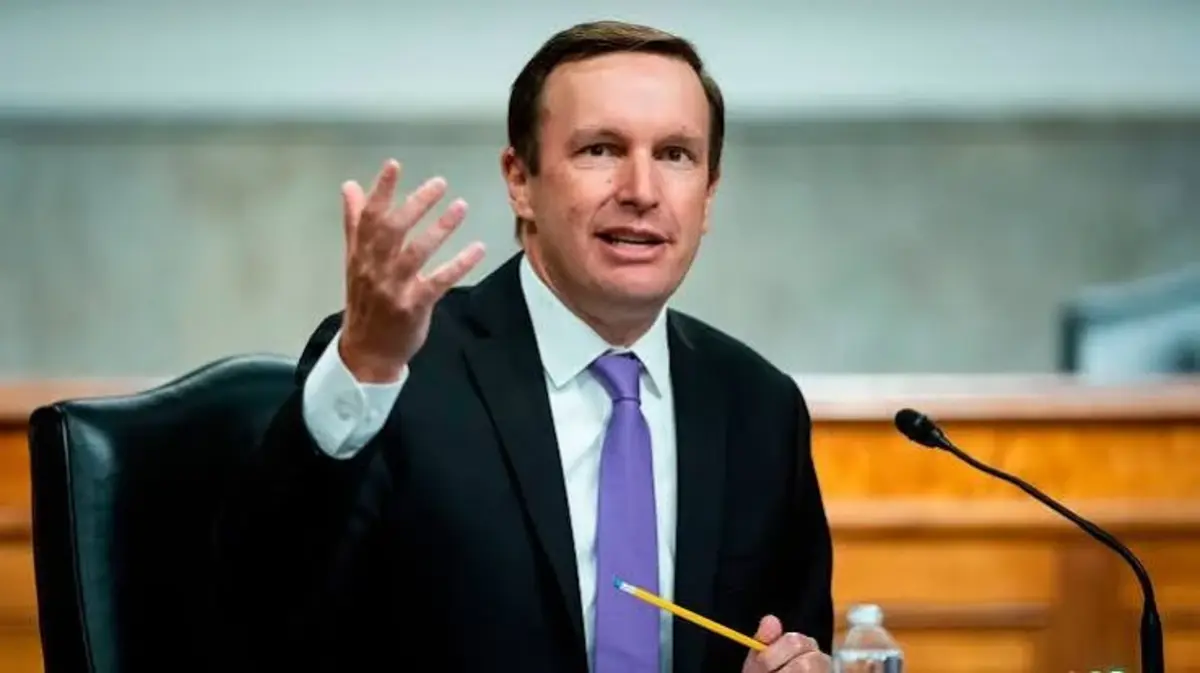
Chris Murphy Bio: Age, Family, Education, Politics & Net Worth
Chris Murphy ranks among the most influential Democratic leaders in the United States Senate. His work spans healthcare, gun safety, foreign policy, labor rights, and democratic reforms. Since entering the Senate in 2013, he has built a reputation as a vocal advocate for progressive policies and bipartisan solutions where possible.
As of 2026, Murphy serves his third Senate term after winning reelection in 2024. He also holds the position of Deputy Secretary of the Senate Democratic Caucus, giving him a larger leadership role within his party.
This biography explores his early life, education, political career, family, achievements, policy positions, and latest developments.
Early Life and Background
Christopher Scott Murphy was born on August 3, 1973, in White Plains, New York. However, he grew up in Wethersfield, Connecticut, where he developed an early interest in public service.
His parents encouraged civic engagement and education. Consequently, Murphy became interested in government and community leadership during his teenage years.
His upbringing in Connecticut later shaped many of his policy priorities, including manufacturing, education, and healthcare.
Quick Facts
- Full Name: Christopher Scott Murphy
- Date of Birth: August 3, 1973
- Age (2026): 52 years
- Birthplace: White Plains, New York
- Hometown: Wethersfield, Connecticut
- Political Party: Democratic Party
- Profession: Lawyer and Politician
- Current Office: U.S. Senator from Connecticut
Education
Murphy attended Williams College in Massachusetts, where he earned a Bachelor of Arts degree.
Later, he graduated from the University of Connecticut School of Law with a Juris Doctor.
After completing law school, Murphy practiced real estate and banking law before entering politics full time. His legal background strengthened his understanding of legislation and public policy.
Early Political Career
Murphy entered politics at a remarkably young age.
In 1998, he challenged a long-serving Republican incumbent for a seat in the Connecticut House of Representatives. He won the election at just 25 years old.
His victory marked the beginning of a steady rise through public office.
After serving two terms in the state House, Murphy won election to the Connecticut Senate in 2002.
During his time in the state legislature, he supported:
- Stem cell research
- Public health initiatives
- Workplace smoking restrictions
- Education funding
- Consumer protection reforms
These accomplishments helped establish his statewide profile.
Service in the U.S. House of Representatives
Murphy won election to the U.S. House of Representatives in 2006.
He represented Connecticut’s 5th Congressional District from 2007 until 2013.
During his House tenure, he focused on:
- Affordable healthcare
- Housing assistance
- Veterans’ services
- Disability rights
- Economic development
One of his notable legislative achievements involved housing programs for people with disabilities. The legislation later became law.
He also advocated for stronger federal investments in Connecticut communities.
Election to the U.S. Senate
In 2012, Senator Joe Lieberman announced his retirement.
Murphy entered the Democratic primary and secured the nomination.
He later defeated Republican candidate Linda McMahon in the general election.
At age 39, Murphy became one of the youngest members of the Senate.
He officially took office on January 3, 2013.
Senate Career
Murphy has developed expertise across several major policy areas.
His committee assignments include:
- Senate Appropriations Committee
- Health, Education, Labor and Pensions (HELP) Committee
- Senate Foreign Relations Committee
These assignments allow him to influence domestic and international policy.
Healthcare
Healthcare remains one of Murphy’s signature issues.
He has consistently supported:
- Expanded health insurance coverage
- Lower prescription drug prices
- Mental health funding
- Affordable medical care
Murphy also helped advance bipartisan mental health legislation that modernized treatment programs nationwide.
Gun Violence Prevention
Following the 2012 Sandy Hook Elementary School shooting, Murphy emerged as one of Congress’s leading advocates for gun safety legislation.
His efforts have included:
- Universal background checks
- Closing firearm purchase loopholes
- Community violence prevention funding
- School safety investments
In 2022, he served as the lead Democratic negotiator on bipartisan gun safety legislation signed into law.
Foreign Policy
Murphy has become one of the Senate’s most active voices on foreign affairs.
He frequently advocates:
- Diplomacy over military intervention
- Human rights protections
- Strong alliances
- Congressional oversight of military action
His speeches often emphasize rebuilding America’s global leadership through diplomacy instead of prolonged military conflicts.
Economic Policy
Murphy supports policies designed to strengthen working families.
His priorities include:
- Raising wages
- Expanding labor protections
- Supporting American manufacturing
- Investing in infrastructure
- Creating middle-class jobs
He also promotes federal purchasing of American-made products through “Buy American” initiatives.
Leadership Within the Democratic Party
Murphy’s influence has expanded beyond committee work.
In 2025, Senate Democrats selected him as Deputy Secretary of the Senate Democratic Caucus.
He has also become one of the party’s most visible communicators on democracy, economic policy, and institutional reform.
Political Positions
Murphy generally supports:
- Affordable healthcare
- Climate action
- Gun safety reforms
- Voting rights protections
- Reproductive rights
- Immigration reform
- Labor unions
- Public education investments
However, he has occasionally worked across party lines on bipartisan legislation, especially involving mental health and public safety.
Personal Life
Murphy married Catherine Holahan in 2007.
The couple has two sons.
Public reports indicate they separated in late 2024 after 17 years of marriage.
Outside politics, Murphy enjoys walking across Connecticut each year. These walks allow him to meet residents directly and hear their concerns.
Books
Murphy is also an author.
His writings explore American democracy, economic inequality, and the importance of rebuilding public trust.
His public speaking frequently addresses polarization, civic engagement, and democratic institutions.
Net Worth
Murphy has not publicly disclosed an exact personal net worth.
Financial disclosure reports indicate income primarily from:
- Senate salary
- Investment assets
- Retirement accounts
Independent estimates vary considerably because federal disclosures provide value ranges rather than exact amounts.
Awards and Recognition
Throughout his career, Murphy has received recognition from advocacy organizations for work involving:
- Mental health
- Healthcare access
- Gun violence prevention
- Consumer protection
- Veterans’ issues
His bipartisan mental health legislation remains one of his most widely recognized legislative achievements.
Latest Updates (2025–2026)
Murphy remains one of the Senate’s most outspoken Democratic voices.
Recent developments include:
- Beginning his third Senate term in January 2025.
- Continuing service on Appropriations, HELP, and Foreign Relations committees.
- Serving as Deputy Secretary of the Senate Democratic Caucus.
- Advocating for higher federal wages and broader economic reforms.
- Speaking nationally about democratic institutions and political reform.
Legacy
Chris Murphy has spent more than two decades in public office.
He has built his career around healthcare, economic opportunity, gun violence prevention, and diplomacy.
Supporters praise his policy expertise, communication skills, and willingness to engage difficult national issues.
Critics sometimes disagree with his progressive positions. Nevertheless, few dispute his active role in shaping modern Senate debates.
As American politics continues to evolve, Murphy remains an influential figure within the Democratic Party and a prominent voice on national policy.